Starting with Pi: Imagining Community
It seems perfectly fitting that, on the day I return to rural Maine after having been away for three months, I end up writing the story of how I built my own off-grid house last year.
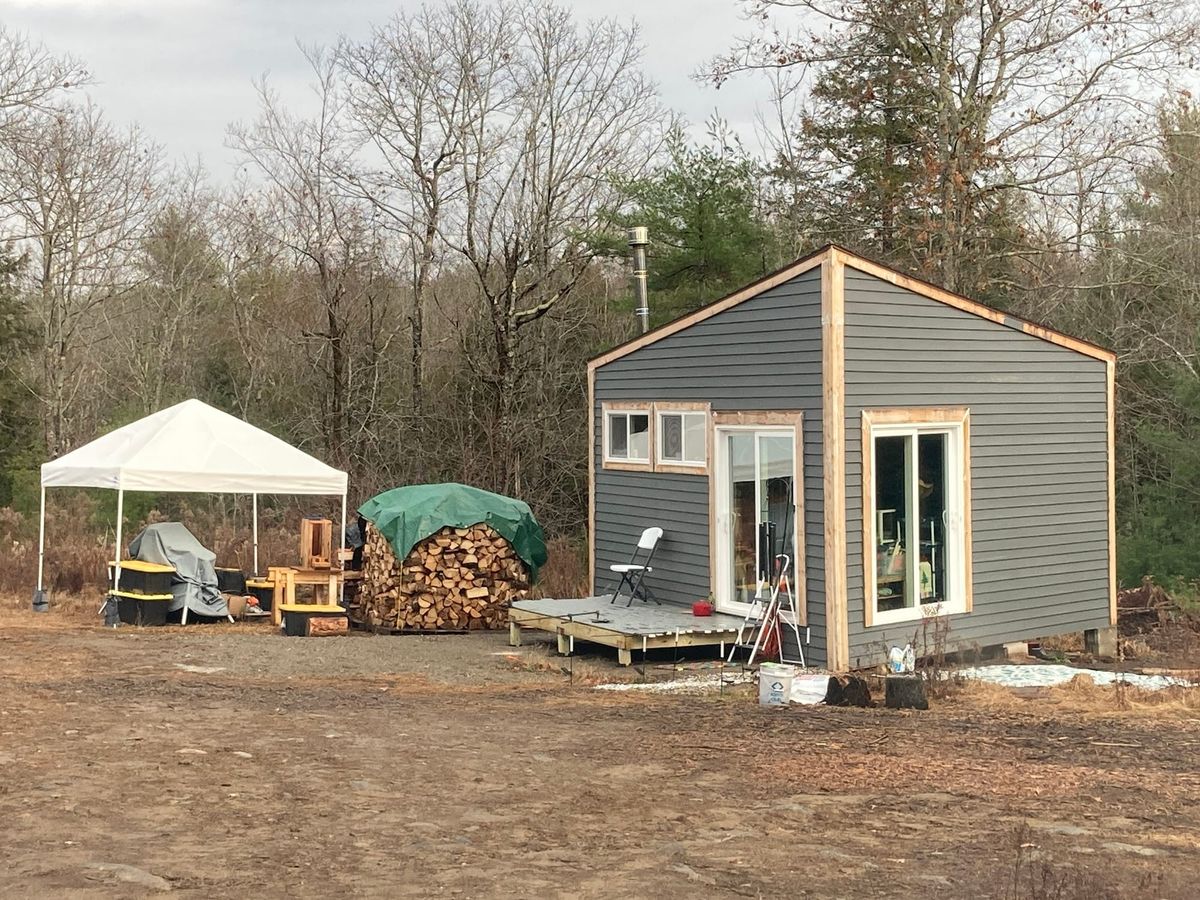
It seems perfectly fitting that, on the day I return to rural Maine after having been away for three months, I end up writing the story of how I built my own house last year.
Wild Abundance, the place I did my carpentry training, recently asked its alumni to submit photos of a project they've worked on using the skills learned during our time on campus. I ended up writing a whole dang blog post, which is more info than any of y'all (save a very tiny handful) have been privy to as I've expanded my life in the last year to include off-grid homesteading.
I am hoping to write and video-post many more of these in the coming year, as I have a backlog of video snippets and photos from the many projects I've been working on since mid-2025. Please enjoy this introductory post, certainly pitched at the WA audience, but that explains a little of what I've been doing for the last 10 months!
In late 2021, I had a vision that I would build my own tiny house on an expanse of land and invite all my friends to stay there with me. But I had no building experience and only an intermediate level of power and hand tool experience – not enough to build something of that scale, for sure. I had spent the previous 30 years as a researcher and teacher, sitting many hours behind a computer, so physical labor was, as I turned 50, new to me, and I was ready for the challenge.
When I found out about Wild Abundance, I enrolled in the Basic Women's Carpentry Workshop in summer of 2023 and loved it so much that I decided to enroll in the Carpentry Apprenticeship program during the summer of 2024. I ended up becoming a Safety Helper on several of the Tiny House and Advanced Women's Carpentry classes, and I LOVED it. I took to heart what one of my early teachers in the program said to us – that taking one tiny house workshop gives us enough knowledge to know what we don't know, but not enough knowledge to go out and build a whole house on our own.
Indeed, one of the biggest lessons I learned during my summer at Wild Abundance was teamwork and collaboration--something I knew well from my time in academia but needed to re-learn as a student. I took to the hands-on work quickly because I had a larger purpose behind it – a purpose that was starting to take shape more clearly as I worked my way through the program, and that purpose was driven, largely, by a sense of community. I wanted my tiny house community to be a space where other elder queers could come live out their lives with each other.
It was only two weeks after I finished my summer at Wild Abundance when Hurricane Helene devastated the area. I knew I had to go back to help build tiny houses for those who had lost their homes, but I also knew I had emergency family obligations to manage elsewhere and didn't need to get in the way of local mutual aid doing its amazing work in Barnardsville, NC. So I waited until December of that year to return to Wild Abundance to help build tiny Helene Homes for flood victims who had lost their housing.
It was during that trip, on a wildly rainy Sunday as I searched online, that I found the land that would become my tiny house community in rural Maine. By June of the following year, a group of friends-as-business-partners and I had closed on the land, and I moved onto the undeveloped acreage, excited but very nervous to build my first structure.
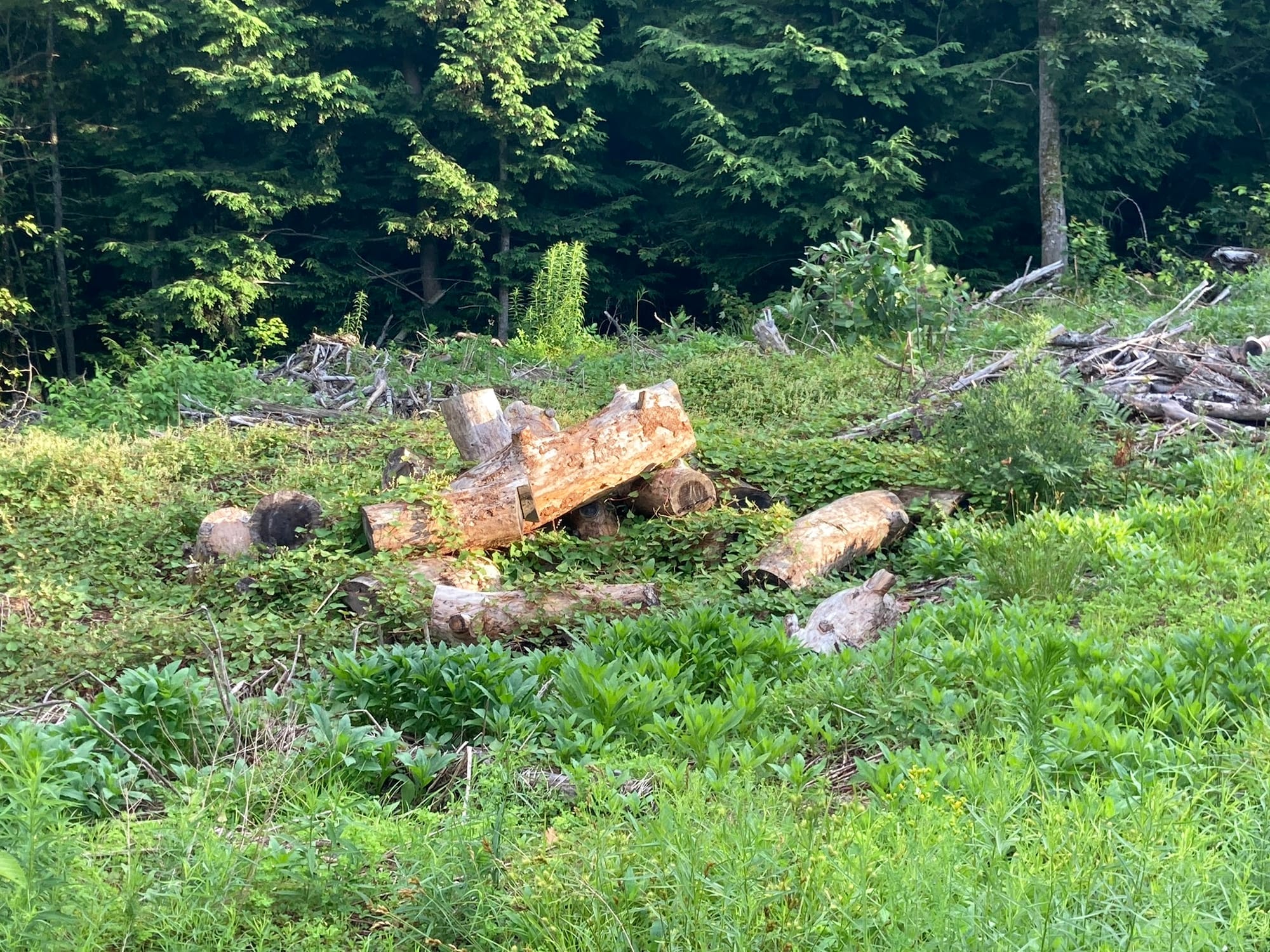
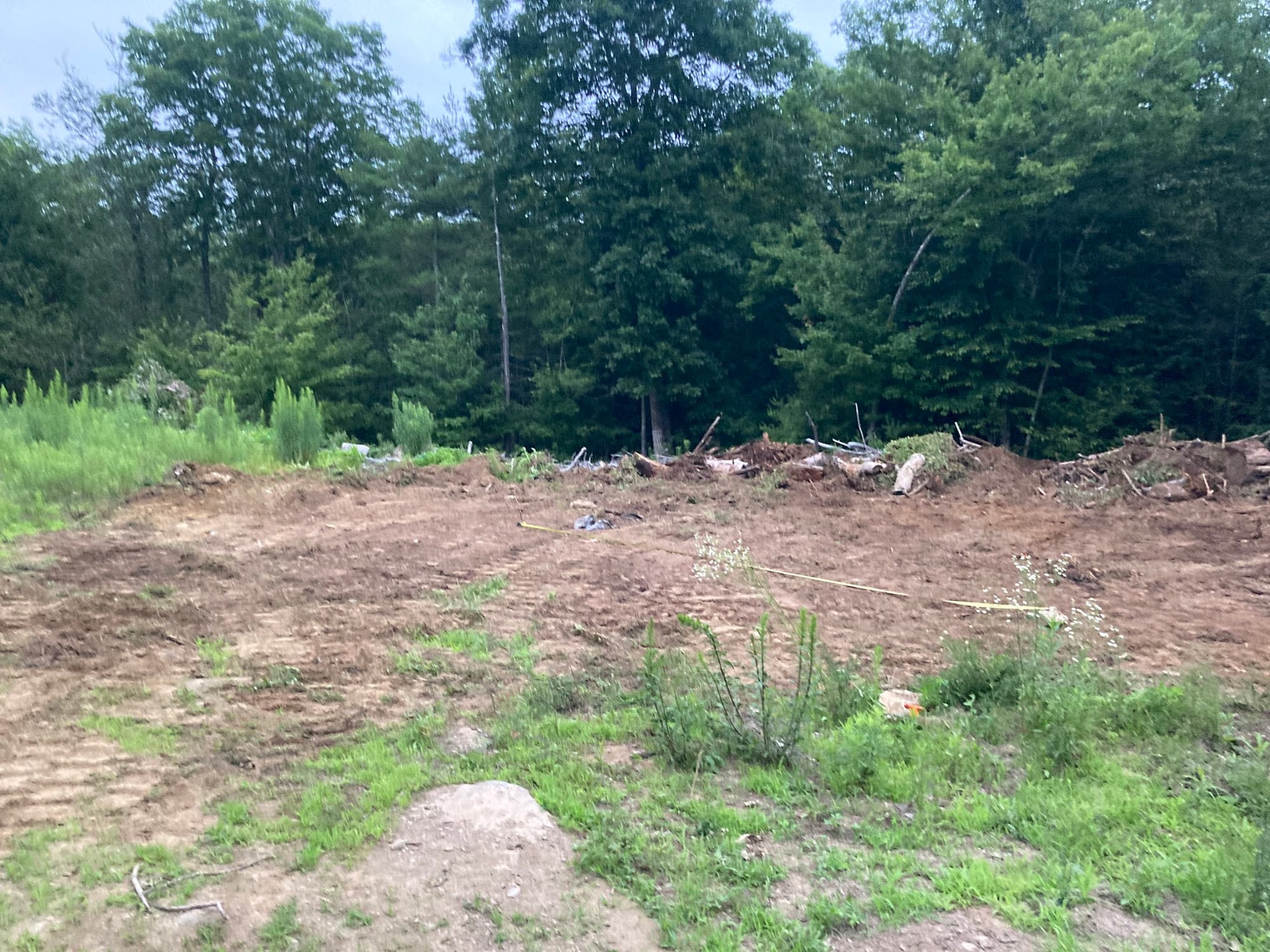
A small portion of the land was cleared after many conversations with it, to make space for the Pi House out of what was once an old log yard.
I was grateful that, just a few weeks into living there in temporary quarters, a lovely friend from out west with decades of experience building unusual homes and structures that align with the natural elements, reached out to ask if he could help me build my first house. I had forgotten that the process required me to be collaborative, and the universe kindly reminded me of it when quiet, stoic Tohmas called out of the blue. I had met Tohmas just over a year earlier when I ended up working for him and his fantastical partner and my laugh twin, Marilyn, at the gem show in Tucson. Marilyn and Tohmas set up a temple–showroom of crystals, stone beings, and beautiful carved wooden statues every year for the largest gem show in the world, and I got to be part of that beauty with them, thanks to a "chance" interaction as a customer two years before.
During the February 2025 gem show, I finished reading a book Tohmas had written years earlier with a friend of theirs. In short, the book, "House As Teacher," described the spiritual and emotional process of building a house in alignment with the energy of the land and the person inhabiting it. That was the kind of building process and structure I wanted to envision! But I also really loved building the quick, functional, rectangular tiny homes I had been trained to build at Wild Abundance; there was beauty in their simplicity and expediency. So I was torn: undecided on the design of my house and waffling on its squareness for weeks. Tohmas helped me think and feel, literally, outside the box, to design a house that fit the spirit of the land: the Pi House – because it is shaped like a slice of pie!
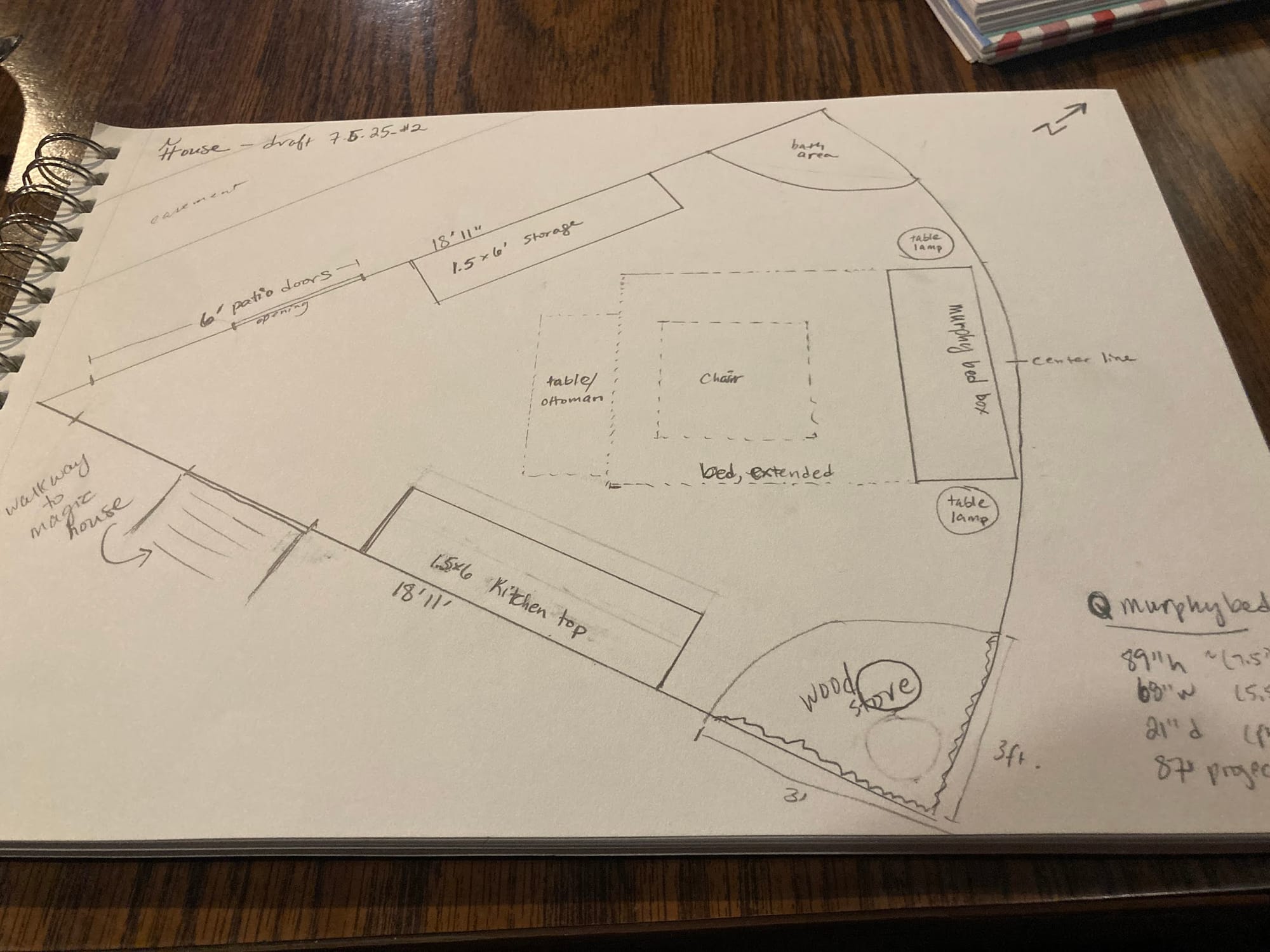
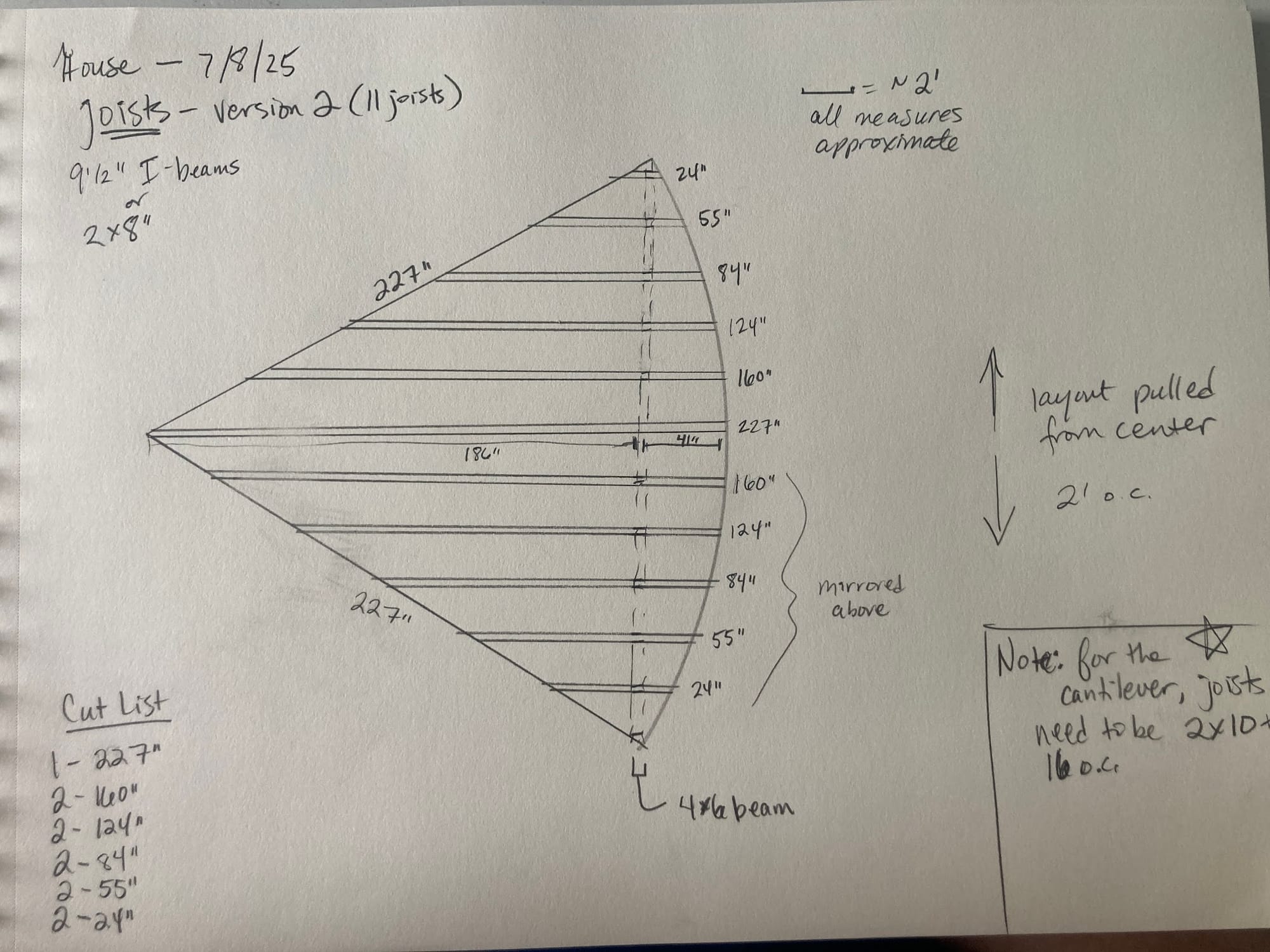
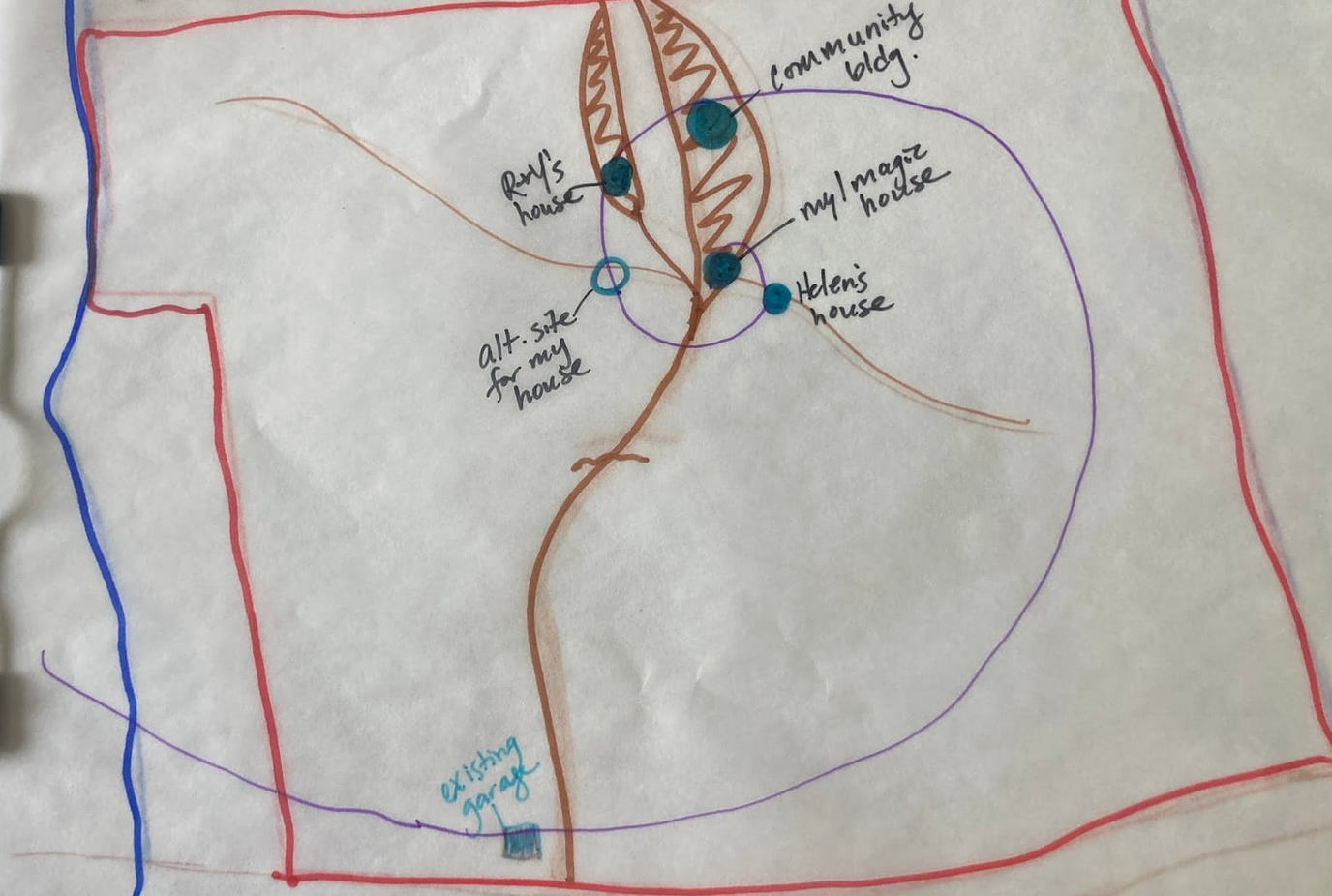
Initial drawings for the Pi House layout and design and a hand-drawn map of where it would be situated on the land.
If one were to superimpose a Fibonacci sequence or Golden Ratio onto the land (as I did in deciding where to build), the Pi House is situated exactly at its central, starting point. These three mathematical constants—Pi, the Fibonacci sequence, and the Golden Ratio—express a fundamental harmony with the land. The Pi House has two straight walls (each with a sliding glass door by its point) and one curved back wall. This design allows the energy to flow counterclockwise from the tip of the pie slice so that the energy is constantly renewing itself through the affordances of the sliding glass doors. Additionally, the Pi House is designed in nearly every aspect with the master number 11—the side walls are 18'11" (which numerologically add up to 11), the tallest height of the curved shed roof is 11'11", and so on. We also buried a 150mm Shungite cube under the flooring to help the house ground its vortex energy into the Earth Mother.
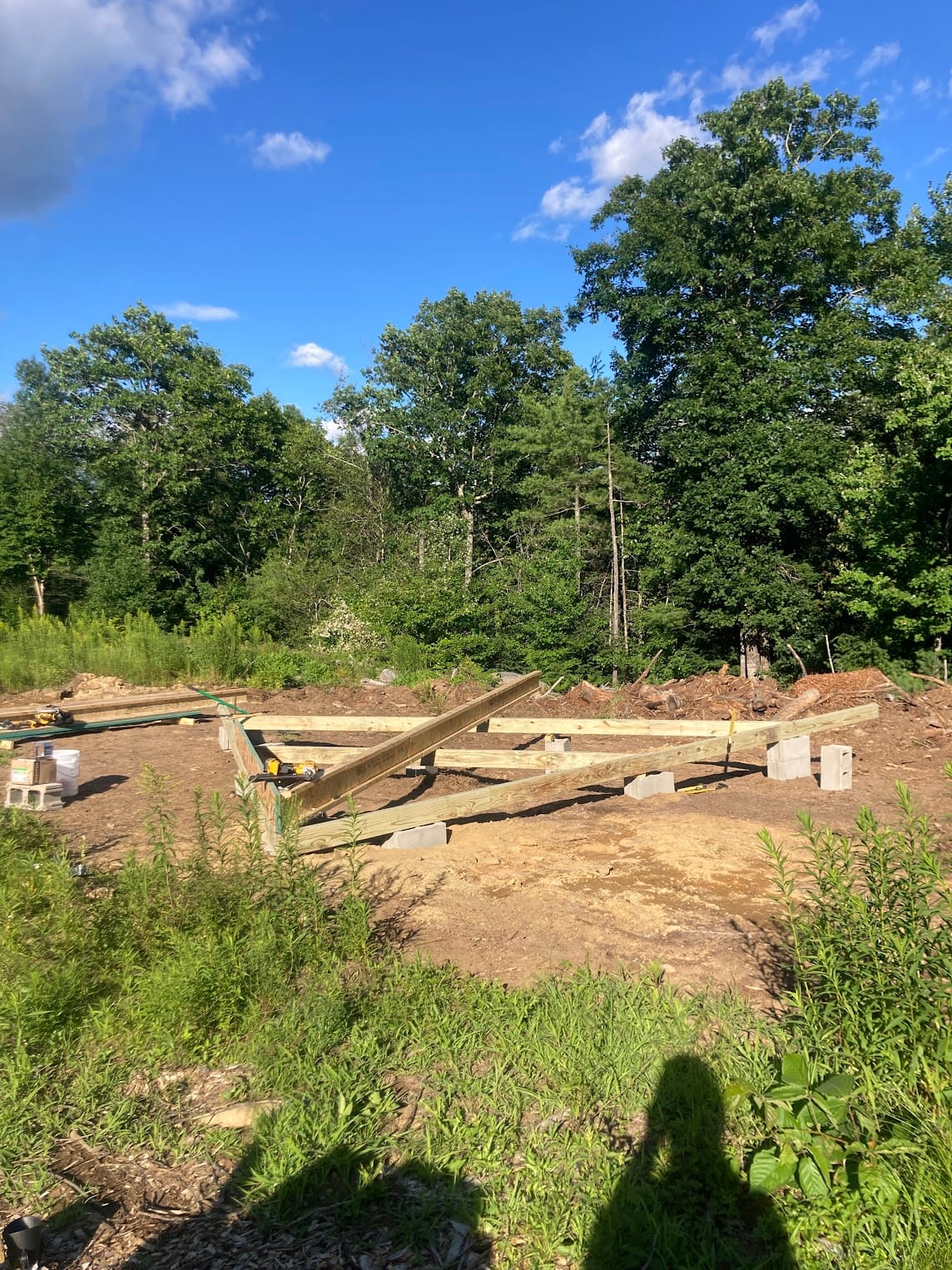
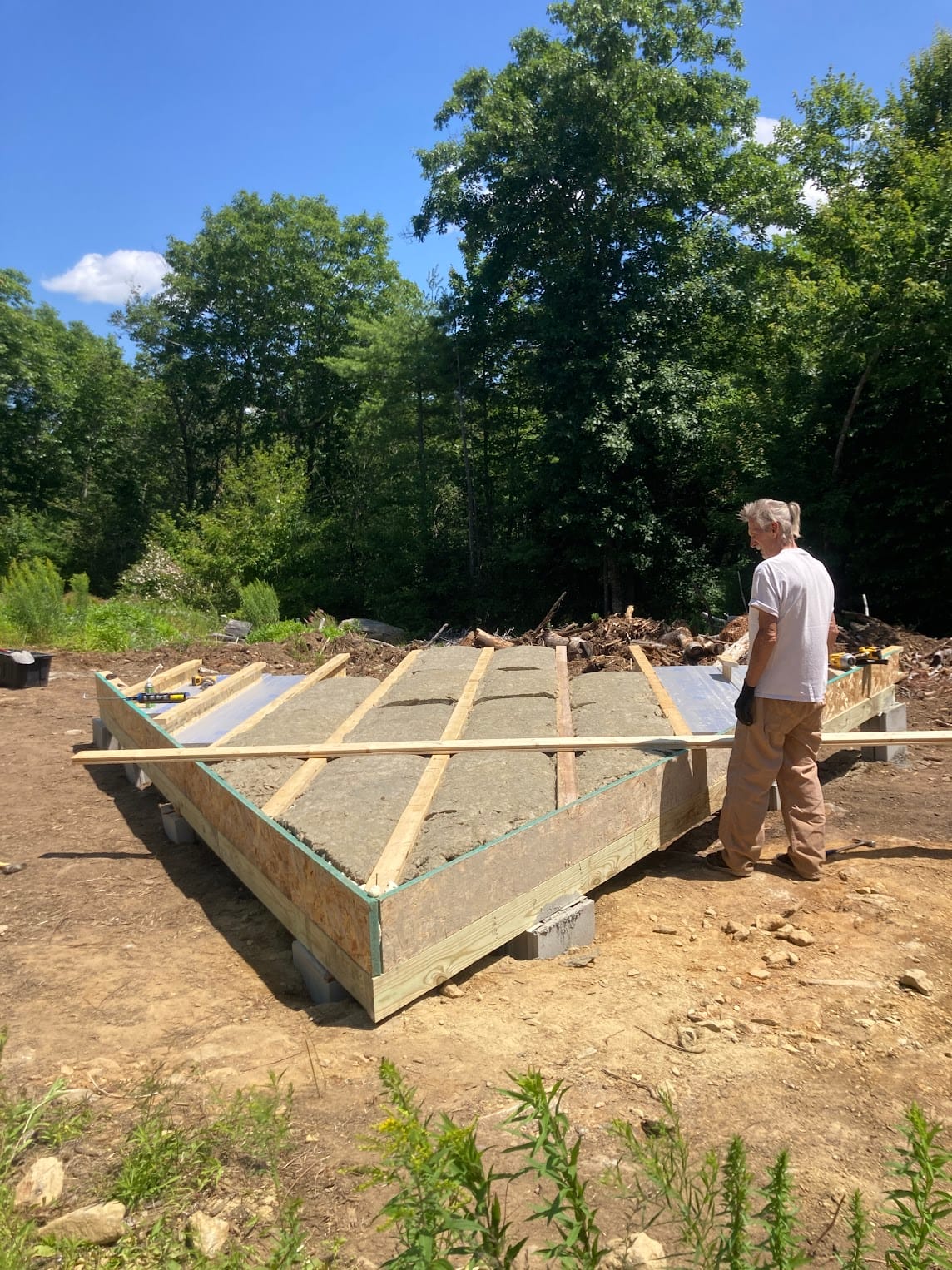
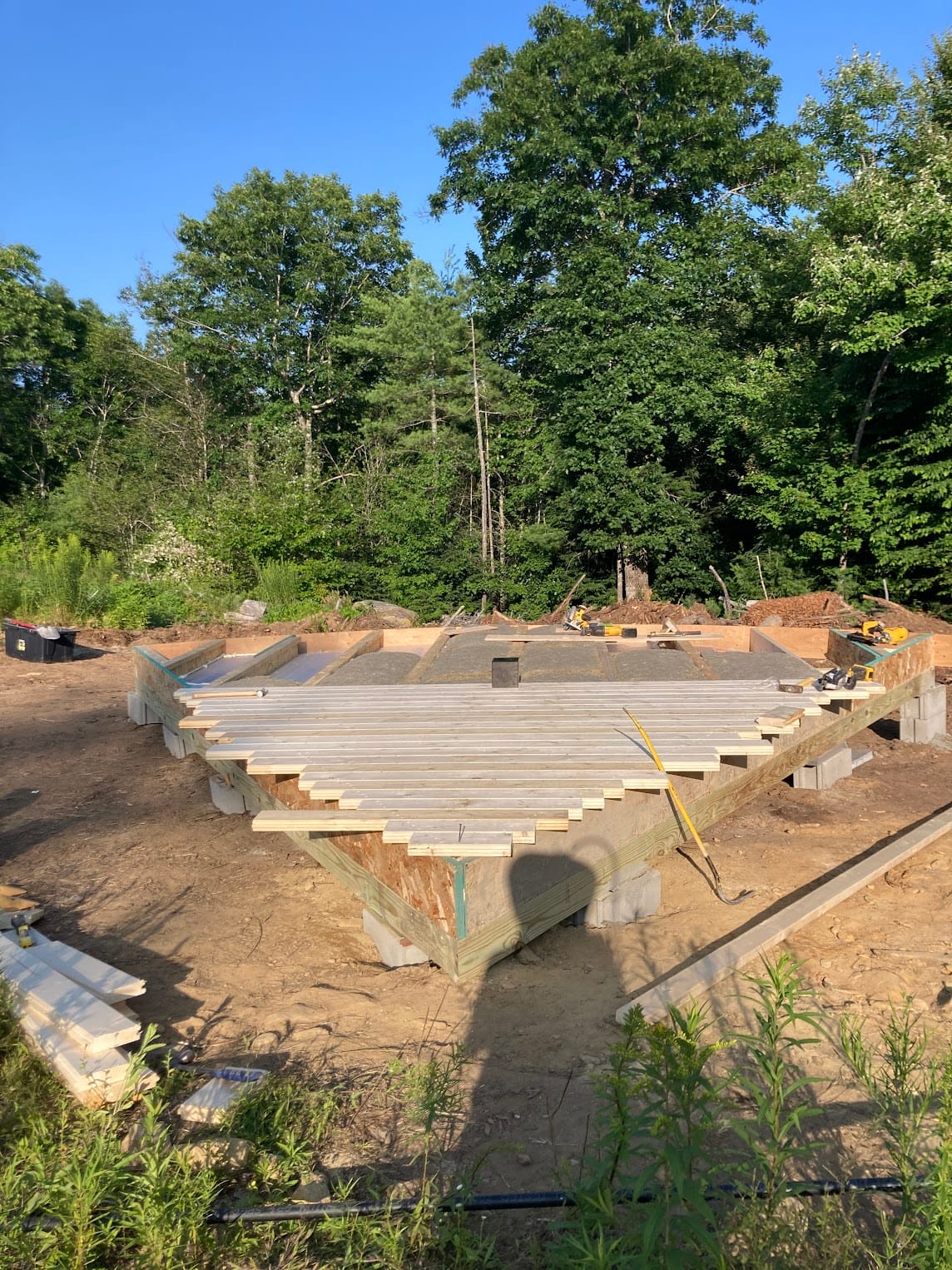
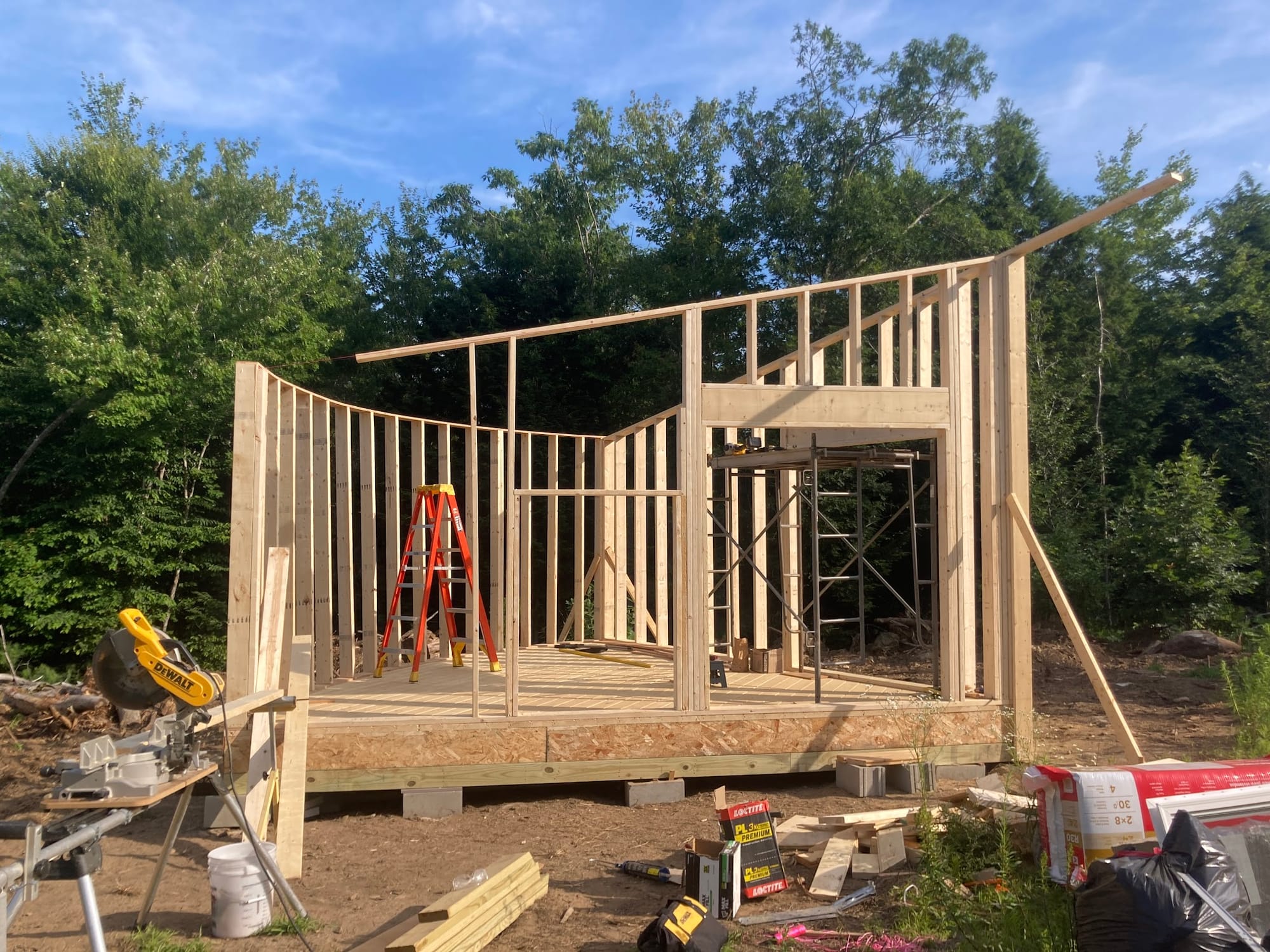
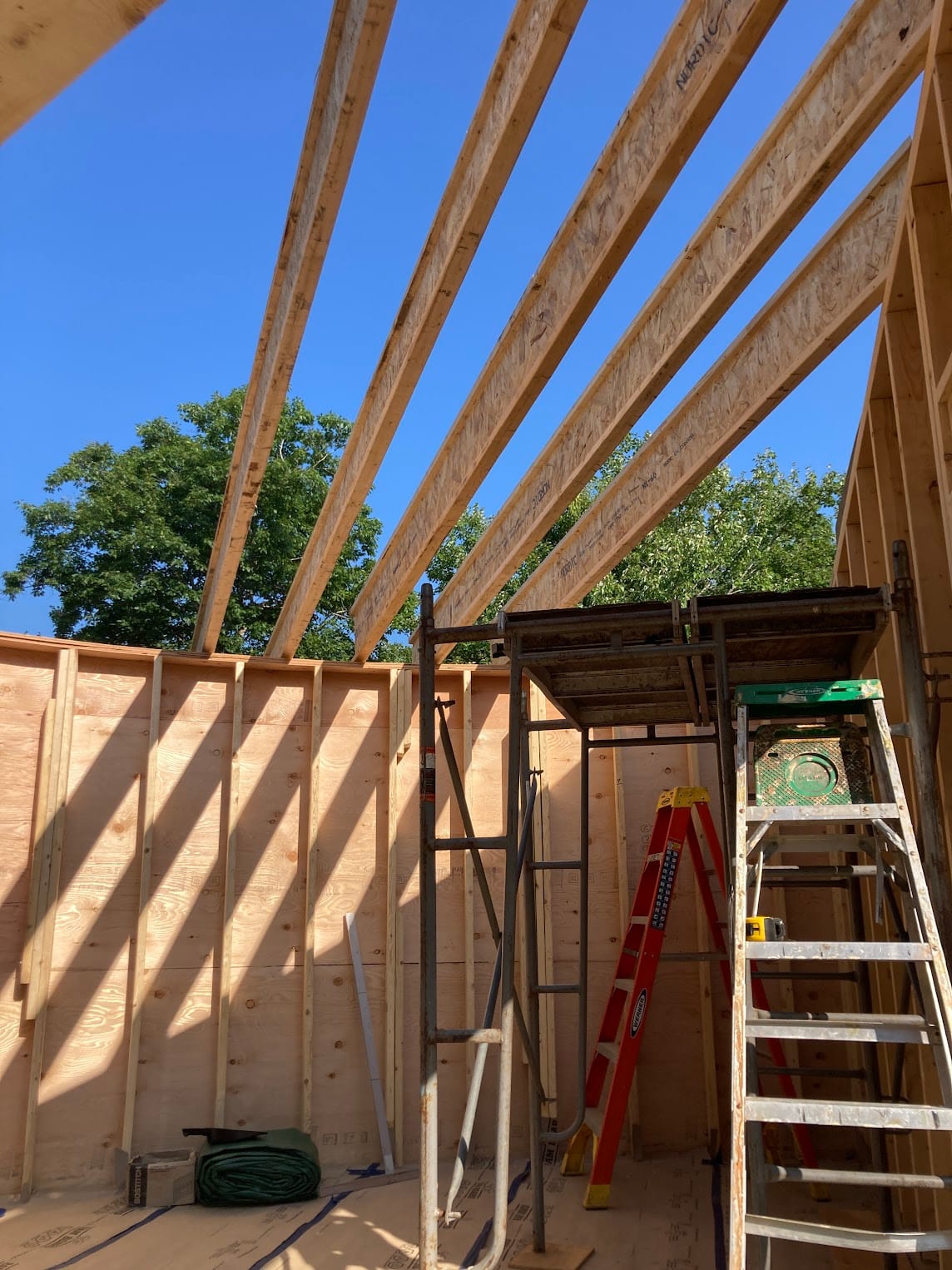
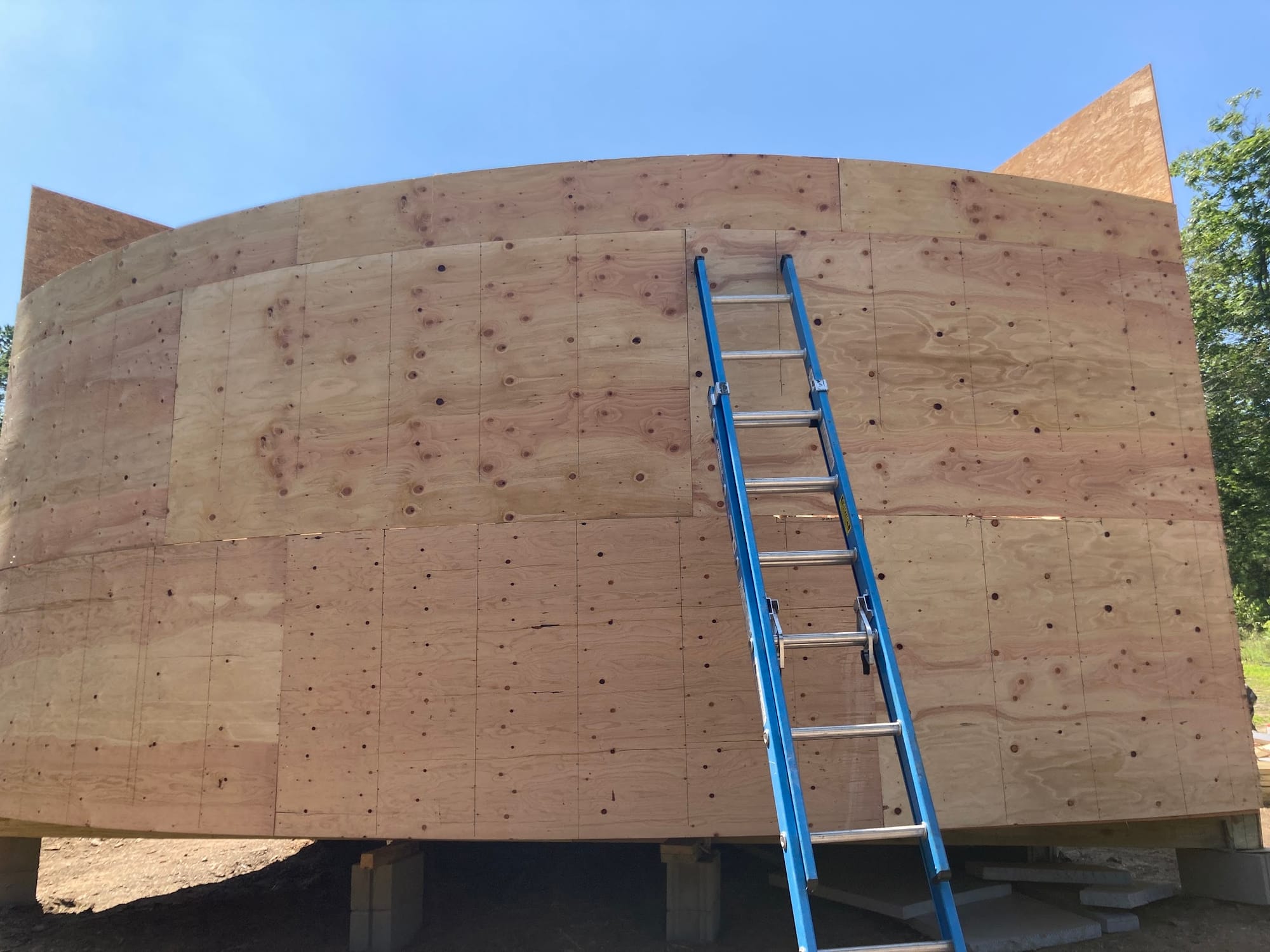
The Pi House coming together, in 10 days, with just me and Tohmas working on it! (Tohmas is superman, no joke.)
Every step of this build was a learning experience, both personally and with Tohmas. During the process, I had become a semi-expert at ordering lumber over the phone from one of the local lumber yards, whose staff were super helpful and more than willing to deliver loads almost daily to my remote job site as we piece-mealed the house together, sometimes changing aspects of the design as we went. One of the staff members referred to me as a general contractor during one of my calls, which made my blush with pride at all I had learned to do from that first visit to a lumber yard during my Basic Carpentry course with Quetzal in 2023 to building my own freaking house exactly two years later!? I had to keep meticulous notes on the build orders and payments because I had to report all of it to my land partners and because we had plans to build an exact duplicate of the Pi House the following year to host our community meditation, yoga, and healing space. (That one we colloquially called the Magic House.)
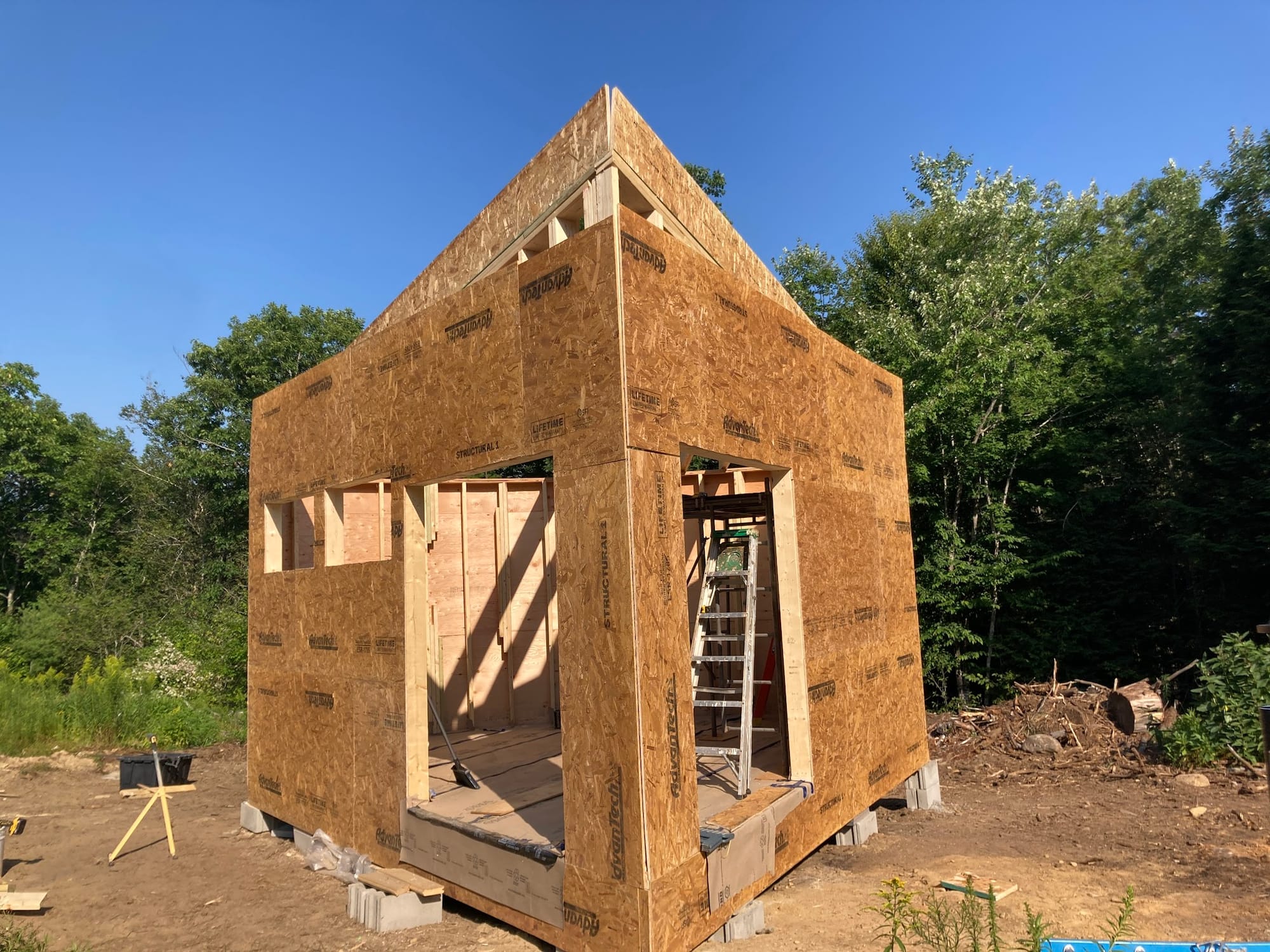
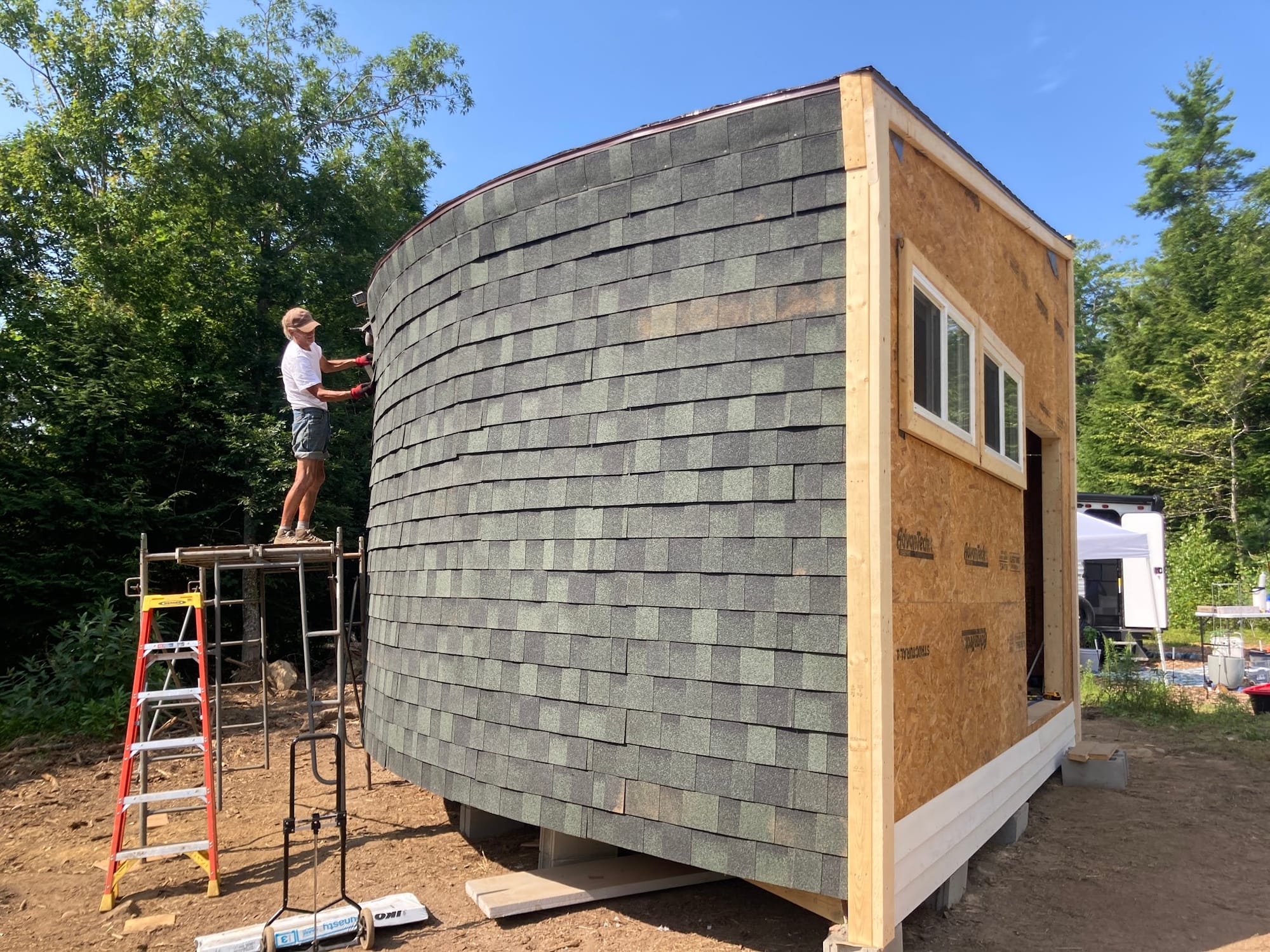
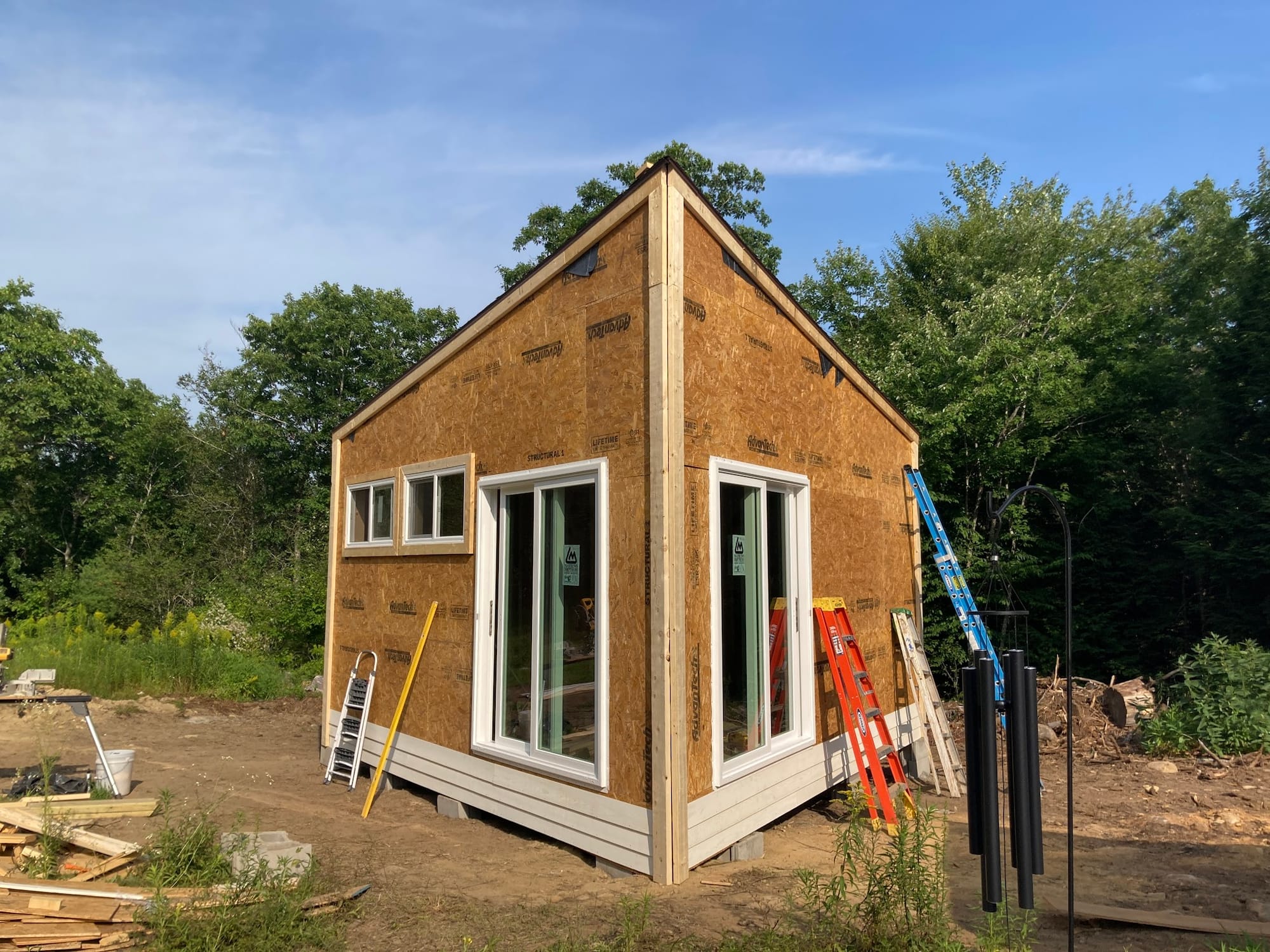
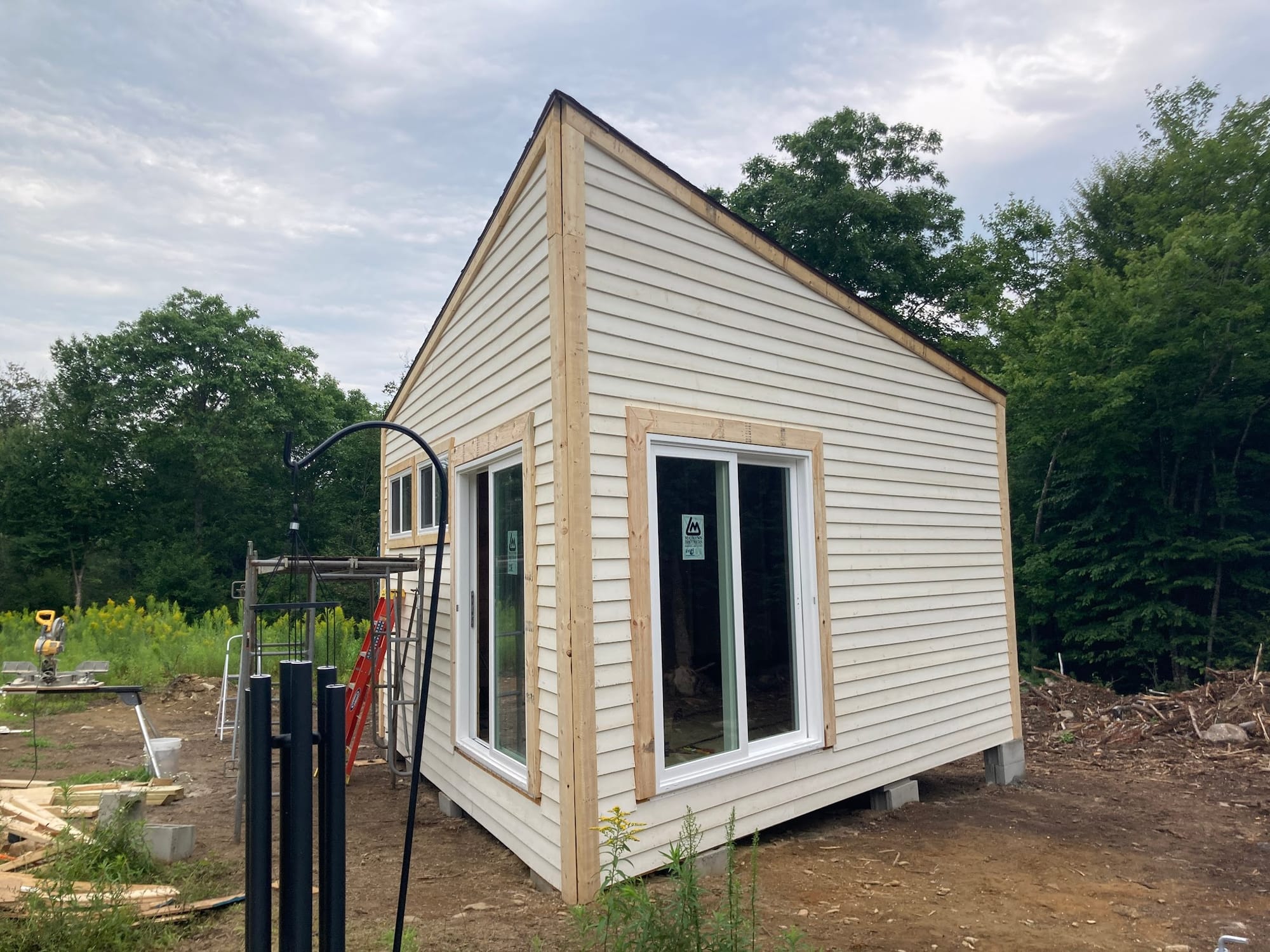
Finishing the sheathing and siding on the Pi House. The imperfections that are built into the process are mine to love and accept.
After 10 straight days of working 7am–5pm in the record-breaking heat of July 2025, the house was dried in, and Tohmas returned home. Friends who came to see it marveled at its pie-shape and feeling of spaciousness, yet it was only 200 “square” feet inside. Folks from the lumber yard took keen interest in helping me figure out little things that I needed to do to finish the initial build such as how to create an exact point on the outside trim of the pie tip (Spoiler: I had to use a neighbor’s table saw, which I had learned how to use at Wild Abundance, and several pieces of rough-sawn 2x4 to cut it down to a perfect triangle that would fit into the gap left between two 2x6s).
I used so many tools I learned to use at Wild Abundance: a chop saw, circular saw, pull saw, reciprocating saw, framing nailer, trim nailer, multi-tool, hammer tacker/stapler, impact driver, and, of course, my handy pencils, utility knife, measuring tape, and speed square! And the only “significant” injury I managed during the build was to hammer my thumb, twice no less, while we were hanging clapboard siding on the last day of the build, in the rain. Tohmas kindheartedly chuckled at me for using a 19 oz. framing hammer to do the work of a much smaller hammer. (And there I learned a good lesson about the dozen of hammer types available!)
I spent the rest of Fall 2025 finishing out the Pi House, moving into it, and making it livable in an off-grid fashion. I wired it with the help of my neighbor Jeremy, had open-cell insulation blown in, made my own wood panels out of birch plywood, had another neighbor, James, help me drywall and paint the ceiling and hang the wood panels. I got his help installing a murphy bed on the curved wall (an engineering feat!), and then I sanded and varnished the floors, built a table for my tiny wood stove to sit on, and added a small deck and simple stairs before the first snow fell. I still have to add the sliced river rock tile to the curved wall, trim inside the doors and windows, and paint the trim outside, and those are projects for 2026!
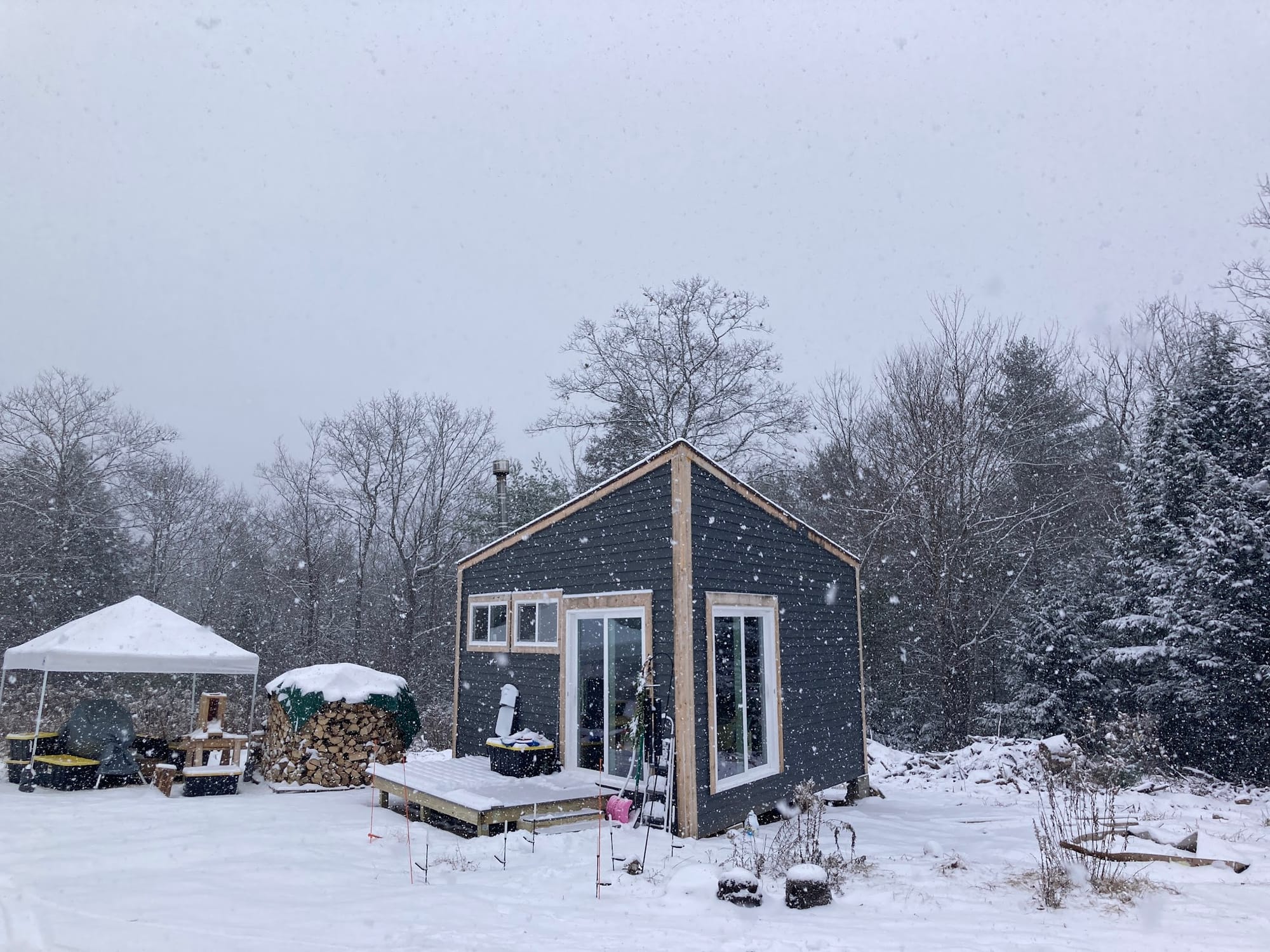
My time at Wild Abundance seems like eons ago, but it was only two years ago this month that I started the 4-month carpentry program. That spur-of-the-moment decision to apply was a huge turning point in my life, and it gave me the confidence to be able to co-build my house, act as the GC on my project, and be able to finish a bunch of the work myself. I am so excited about all the smaller builds I have coming up this year, and every time I sketch out a design or start a materials list, I am grateful for my time and all the teachers and friends I made at Wild Abundance.